Deck guide
Premodern Goblins Deck Guide
Also known as: RB Goblins · Mono-Red Goblins · Onslaught Goblins
Goblins is a Tier 2 aggro deck in Premodern, with a 48.9% win rate in the Duress Crew MTGO dataset.
At a glance
Event decklists
398 decklists on file
Showing the 8 most recent.
| Finish | Players | Decklist | Date |
|---|---|---|---|
| 1 | 134 | Brandon Nixon Goblins — Grand Pre Louisville @ Louisville (KY) (1) | 2026-06-06 |
| 5-8 | 65 | Raúl Osses Goblins — Premier League @ Chile (5-8) | 2026-06-05 |
| — | — | Budget Goblins | 2026-06-02 |
| 3-4 | 36 | Brandon Phan Goblins — $1K @ SCG CON Washington (3-4) | 2026-05-31 |
| 1 | 97 | Radim Franta Goblins — Austria Nationals 2026 @ Vinzirast Mitterind (Vienna, Austria) (1) | 2026-05-31 |
| 5-8 | 138 | pepa Goblins — MTGO Championship Week Finals (5-8) | 2026-05-30 |
| 5-8 | 138 | Danielpena397 Goblins — MTGO Championship Week Finals (5-8) | 2026-05-30 |
| 2 | 35 | Pedrojuniior Thejoker Goblins — 12K na MUITO! @ MUITO! Colecionáveis (Campinas, Brazil) (2) | 2026-05-30 |
Sample list
Most-recent decklist
Brandon Nixon Goblins — Grand Pre Louisville @ Louisville (KY) (1) — 1 · 2026-06-06
Mainboard (60)
Sideboard (15)
| Qty | Card |
|---|---|
| 2 | Anarchy |
| 1 | Flaring Pain |
| 2 | Price of Progress |
| 2 | Pyroblast |
| 3 | Pyrokinesis |
| 2 | Red Elemental Blast |
| 3 | Tormod's Crypt |
Game plan
What Goblins is trying to do
An explosive Onslaught-fuelled tribal aggro deck that turns Goblin Lackey into Piledrivers, Warchiefs, and Siege-Gang Commanders before opponents stabilize. It plays as a aggro deck in Tier 2 of the current Premodern metagame.
Core cards
What defines Goblins
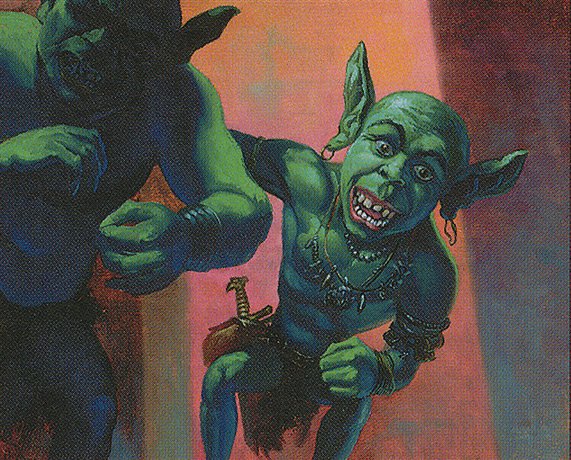
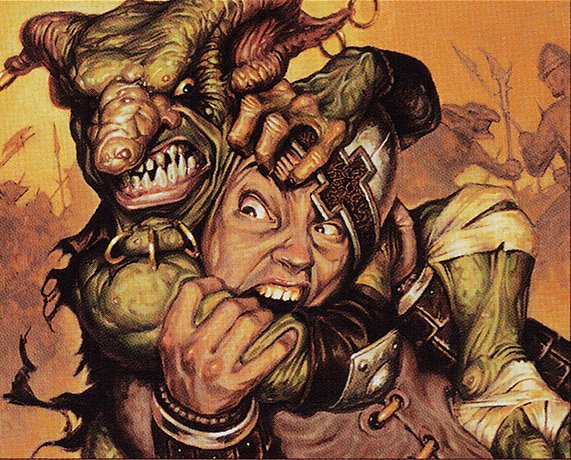
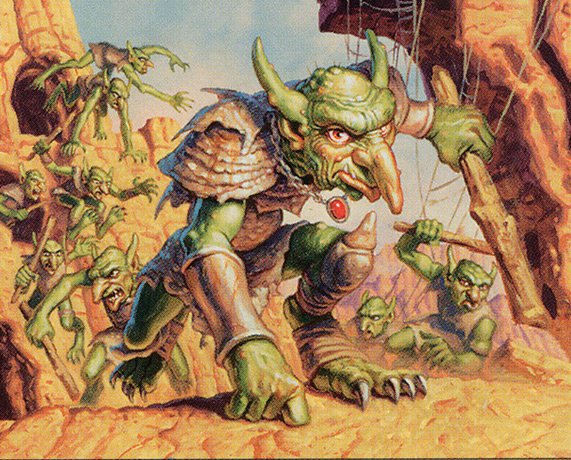
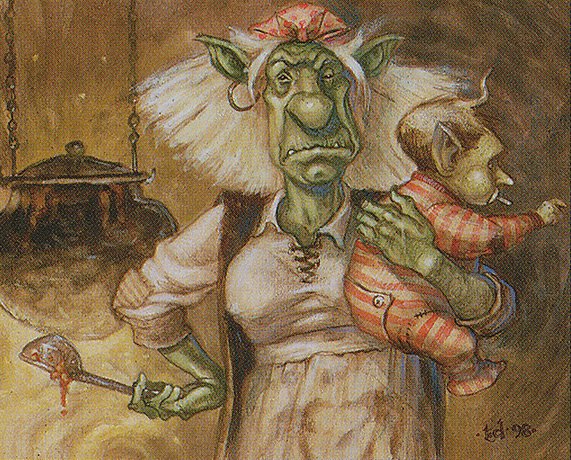
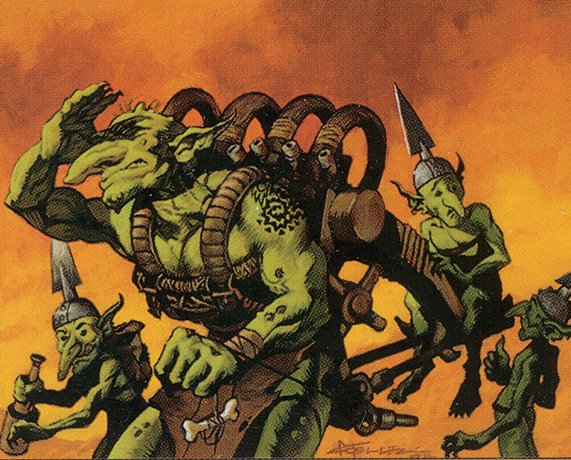
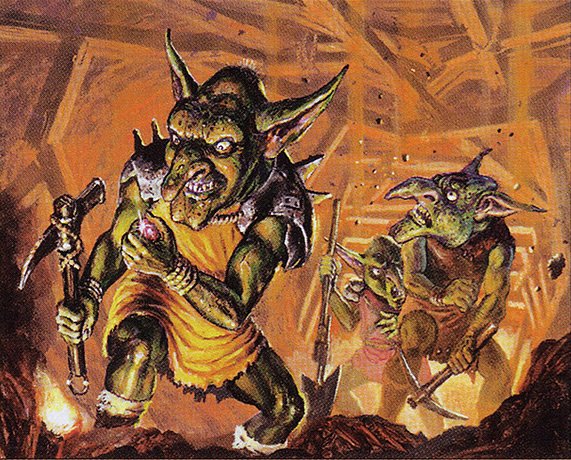


Sideboarding & matchups
How Goblins fares
MTGO match data via the Duress Crew Premodern Data Analysis Project.
- Deadguy Ale 74.4% n=39
- Survival Madness 70% n=60
- Elves 67% n=115
- Black/White Control 66.7% n=78
- Survival Rock 59.6% n=57
- Blue/White Dreadnought 23.8% n=42
- Red/Green Oath Ponza 29.9% n=77
- Replenish 32% n=97
See the full matchup matrix for head-to-head pairings across the format.
Strategy
How to play Goblins
Game plan
Premodern Goblins is one of the format’s cleanest real decks: proactive, punishing, and brutally good at turning small mistakes into game losses. That alone would make it worth learning. What makes Goblins more than just another aggro deck is that it does not stop functioning once the first wave is answered. It has pressure, tutoring, card advantage, and enough midgame resilience to beat people who think a single removal spell solved the problem.
Where Sligh asks whether the opponent can survive direct damage, Goblins asks a more annoying question — can they survive repeated battlefield pressure, tutoring, and a pile of ugly combat steps that never line up cleanly? A lot of decks cannot. At the highest level the deck is a pressure deck with a built-in recovery engine, and that is the distinction that matters. Lots of Premodern aggro decks pressure early; Goblins pressures early and keeps going once the game slows down, which gives it a fundamentally different texture from decks that rely only on a fast draw.
It wins through three overlapping plans. First, early battlefield pressure: a quick curve forces awkward early blocks or removal immediately. Second, board snowballing: once multiple goblins are down, lords and token generation make every combat exchange worse for the opponent. Third, tutor-and-recover: Goblin Matron finds the exact goblin you need and Goblin Ringleader reloads after a sweeper. These last two are what turn a cute tribe deck into a serious archetype — they let you recover, reload, and shift between pressure and problem-solving. The deck is not just fast. It forces opponents into a battlefield game they do not control, then outlasts them once that battlefield gets messy.
Why it works in Premodern
Premodern is a format where creature combat still matters a lot, many decks spend their early turns sculpting or fixing mana, removal is powerful but usually one-for-one, and sweepers exist but not every deck can line one up cleanly. Goblins exploits every one of those conditions.
It punishes awkward early turns — plenty of strong Premodern decks hate being attacked by a real board on turn two. It strains spot removal, because one answer rarely solves the matchup when you keep presenting bodies and rebuild better than expected. It generates genuine material through Ringleader, one of the nastiest “fair” card-advantage sources in the format when the deck is built around it. And it has tutor access through Matron, which lets the deck change roles mid-game and is a huge part of why experienced pilots outperform the deck’s surface-level simplicity.
Two banlist facts shape the deck more than anything else. Goblin Recruiter is not played here — its library-stacking engine is what makes Legacy Goblins a near-combo deck, and Premodern does without it — so the deck must rely on natural draws and Matron tutoring, which makes it more honest and more interactive. Just as importantly, there is no free countermagic in the format to punish a turn-one Goblin Lackey: every opponent has to spend real mana and a real card to answer it, which is a format-warping constraint in your favor. The deck also has no Aether Vial (a 2004 card, outside the pool), so Goblin Lackey and Goblin Warchief carry the entire “cheat on mana” burden. That makes Goblins a touch more vulnerable to removal than its Legacy cousin, but more explosive when the key pieces connect.
On the tier list, the Spike Colony ranking (updated March 10, 2026 by Lanny Huang) places Goblins in Tier 2, the top aggro deck and roughly the #3 most-played archetype overall at about 7–8% of the field. Lanny’s read: the deck is “deceptively powerful… explosive and grindy plans with a touch of mana disruption.” The January 18, 2026 Parallax Tide ban is a net positive for the archetype — it weakened several of Goblins’ worst blue-based matchups — and format creator Martin Berlin has named Goblins among the top decks of the post-ban metagame.
Representative decklist
The reference list below is Phil Taylor’s RG Goblins, 5th place at the 2024 Universal Championship — the current community-default build. RG is the most-explored variant (roughly 65–70% of recorded Goblins lists) and the safest starting point.
Mainboard
| Count | Card |
|---|---|
| 4 | Goblin Lackey |
| 4 | Mogg Fanatic |
| 4 | Goblin Piledriver |
| 4 | Goblin Warchief |
| 4 | Goblin Ringleader |
| 4 | Goblin Matron |
| 3 | Gempalm Incinerator |
| 3 | Siege-Gang Commander |
| 2 | Skirk Prospector |
| 1 | Goblin Sharpshooter |
| 1 | flex goblin |
| 3 | Naturalize |
| 8 | Mountain |
| 4 | Wooded Foothills |
| 4 | Karplusan Forest |
| 4 | Rishadan Port |
| 2 | City of Brass |
| 1 | Forest |
| 1 | Mossfire Valley |
Sideboard
| Count | Card |
|---|---|
| 3 | Pyrokinesis |
| 2 | Pyroblast |
| 2 | Red Elemental Blast |
| 2 | Tranquil Domain |
| 2 | Tormod’s Crypt |
| 1 | Naturalize |
| 1 | Goblin Sharpshooter |
| 1 | Goblin King |
| 1 | Goblin Tinkerer |
The general shape barely changes between builds: 32–36 goblins, 24–25 lands, and 0–4 non-creature spells. The goblin count is high on purpose — Ringleader hits about two goblins per trigger, and every non-goblin you add lowers that average. The Red-Black variant swaps the green package for Wasteland, Sulfurous Springs, Bloodstained Mire, and a black splash for Duress and Dralnu’s Crusade; it posted a 53.8% win rate at LobsterCon 2025 versus RG’s 48.6%, the strongest recent showing of any build.
Core cards breakdown
The untouchable core (always four copies). Goblin Lackey (one mana, 1/1) is the deck’s reason for existing: when it connects, any goblin in your hand goes directly into play. A turn-one Lackey appears in roughly 25% of opening hands and creates “different format” games when it lands unanswered. Goblin Piledriver (two mana, protection from blue) is the primary damage engine, gaining +2/+0 for each other attacking goblin and routinely swinging for 7 or more. Goblin Warchief (three mana) grants all goblins haste and shaves one generic mana off their cost — once it resolves, Matron becomes a 2-mana tutor and Ringleader a 3-mana draw-three. Goblin Ringleader (four mana, haste) reveals the top four cards and keeps every goblin, the card-advantage engine that stops the deck from flooding out.
High-frequency inclusions. Goblin Matron (three mana) tutors any goblin — the toolbox piece that fetches Goblin Sharpshooter against creature decks, Gempalm Incinerator against a key blocker, Siege-Gang Commander to close, or Skirk Prospector for a burst kill. Mogg Fanatic sacrifices to deal one damage, superb against the format’s army of X/1 creatures (averaging 3.83 copies across recorded lists). Gempalm Incinerator is almost always cycled rather than cast: for {1}{R} it deals damage equal to your goblin count to a creature and draws a card, and because it is a triggered ability it cannot be countered by Counterspell.
Flexible slots. Siege-Gang Commander (five mana, makes three 1/1s) is the top-end finisher; its sacrifice-a-goblin-deal-2 ability supplies reach and combos with Sharpshooter. Goblin Sharpshooter taps to ping for one and untaps whenever any creature dies — the “machine gun” that takes over creature mirrors. Skirk Prospector sacrifices goblins for red mana, enabling burst turns, the Sharpshooter engine, and clearing your own board to keep Oath of Druids from triggering. Goblin Sledder protects a key body and feeds Sharpshooter. Builds that want a sweeper-proof two-drop reach for Mogg Flunkies (a 3/3 that survives Engineered Plague and Pyroclasm); Sparksmith and Goblin King round out the rogues’ gallery. The Red-Black “Goblin Bidding” line leans on Patriarch’s Bidding and Clickslither to reanimate a sacrificed board.
The mana-denial package. Rishadan Port taps an opposing land during their upkeep — repeatable disruption with no card cost, best against decks chasing specific mana thresholds. Wasteland permanently destroys a nonbasic, devastating against greedy multicolor manabases and combo. RG tends toward Port, RB toward Wasteland. Cursed Scroll gives some builds late-game reach once the hand empties, and City of Brass plus fetchlands like Wooded Foothills and Bloodstained Mire hold the splash together.
How to play (by turn)
Turns 1–2 — establish pressure and identify your role. Decide quickly whether the game is about racing, extending efficiently, playing around a sweeper, or tutoring toward a specific midgame line. The strong opening is a one-drop into another threat with mana development that supports a turn-three burst. Above all, develop in a way that makes Matron or Ringleader better — do not just dump bodies for their own sake. With a turn-one Goblin Lackey that connects on turn two, the choice of what to cheat in is everything: Siege-Gang Commander is the dream (seven power across four bodies, lethal on turn three with any follow-up), Goblin Ringleader when you need cards, Goblin Warchief when your hand is full of goblins to deploy with haste, and Goblin Matron when you need a specific answer. Without Lackey the default curve is one-drop, then Goblin Piledriver, then Goblin Warchief to unlock the discount.
Turns 3–4 — convert presence into pressure. This is where the deck starts to feel oppressive. Force bad combat, keep adding material without overextending blindly into a likely sweeper, and position your tutor or engine for the next cycle. The recurring decisions: whether to commit into a sweeper, whether Matron should find pressure or insurance, and whether to trade in combat or preserve bodies for later scaling. Once Goblin Warchief is down, Goblin Piledriver costs a single red and Ringleader becomes a three-mana draw engine — sequence to exploit that.
Turn 5 and later — out-resource “fair” answers. A lot of opponents assume they only need to survive the first wave. If Goblins untaps into Matron and Ringleader cycles, it becomes an engine deck wearing aggro clothes — rebuilding faster than expected, tutoring for the right tool, and keeping pressure alive while the opponent runs out of clean answers. The signature combo at this stage: Goblin Sharpshooter plus Skirk Prospector (and ideally Siege-Gang Commander tokens) creates a sacrifice-and-untap chain that machine-guns an entire board and burns the opponent out.
Mulligan guide
A keepable hand needs at least two lands and meaningful action. The textbook keep is two-to-three lands, an early body, and a coherent curve that spends mana well over the first three turns. Openers that curve cleanly into Goblin Matron or Goblin Ringleader are often excellent, and against control or combo a hand that develops real pressure early while holding follow-up is worth a lot.
Do not mulligan aggressively for Goblin Lackey in most matchups — the deck has a robust Plan B through Warchief curves and Ringleader card advantage, and a Piledriver / Warchief / Ringleader / three-land hand is a perfectly fine keep with no Lackey. The exception is fast combo (Reanimator, Storm), where maximum speed justifies digging for explosive hands. Critically, a Lackey with no other goblins in hand is a bad keep despite containing the “best card” — it is just a 1/1 for one. The deck’s 32–36 goblin density means most six-card hands still contain a curve.
Ship clunky hands with no early board, value-creature hands with no early development (tempting but too slow), and mana-light speculative hands that only work if the next two draws are perfect. Post-board, weigh that every non-goblin you bring in dilutes Ringleader — Per Rönnkvist’s rule of thumb is that siding out twelve cards against control makes your best card a lot worse.
Sideboard guide
The central tension is that every non-goblin card weakens Ringleader, so the discipline is fewer but more powerful sideboard cards — rarely more than six to eight in any matchup, and never enough to turn the deck into a mushy pseudo-control pile. Post-board Goblins should still feel like Goblins.
The universal staples are Pyrokinesis (free in creature mirrors and against Elves and Sligh), Pyroblast and Red Elemental Blast against blue decks, and Tormod’s Crypt against graveyard plans. The RG splash adds Naturalize (hits Engineered Plague, Oath of Druids, Phyrexian Dreadnought, Circle of Protection: Red) and Tranquil Domain (sweeps non-Aura enchantments, brutal against the GW Enchantress deck’s permanents). The RB splash adds Duress (Per Rönnkvist found it “overperformed, I would almost consider maindecking it”), Dralnu’s Crusade (a lord that turns goblins black, answering Engineered Plague, COP: Red, and surviving Pyroclasm at once), and Anarchy. Situational extras include extra Goblin Sharpshooter, Goblin Tinkerer (artifacts — answers Dreadnought, Cursed Scroll, Mox Diamond), Sulfuric Vortex, Price of Progress, and Recurring Nightmare for the grindiest RB pairings.
Matchup notes
Vs GW Enchantress (unfavorable). A fast clock is your only real tool against the prison plan; the Enchantress deck rates this pairing in its own favor. This is a race — you need to kill before Opalescence plus Parallax Wave or Solitary Confinement locks the board. Bring in Tranquil Domain, Naturalize, and Anarchy, press tempo relentlessly, and use Rishadan Port to keep them off their thresholds. Modern Enchantress builds that prioritize finding the combo as fast as possible are specifically tuned to beat you.
Vs Sligh / burn (even to favorable). A race where both the board and the life total matter. Apply pressure fast, make blocks and trades that preserve your best clock, and avoid slow value lines that do not affect the board quickly. Mogg Fanatic picks off Jackal Pup and Ball Lightning (block then sacrifice), and Goblins has the slightly higher ceiling through Ringleader refueling. Bring in Pyrokinesis and watch for post-board Pyrostatic Pillar.
Vs control / Landstill (even). One of Goblins’ better homes when piloted well: force interaction early, make spot removal line up badly, and use Matron and Ringleader to outlast one-for-one answers. Do not walk blindly into a sweeper, but keep enough pressure that they cannot sculpt forever. Against Landstill, Rishadan Port and Wasteland shine against the mana-hungry plan; do not break Standstill unless you can commit enough to justify gifting three cards. Bring in Pyroblast, Red Elemental Blast, Duress, and Dralnu’s Crusade.
Vs Elves (very favorable). Goblin Sharpshooter wrecks the deck — every key Elf has one toughness — so Matron-for-Sharpshooter is frequently game-winning. Bring in Pyrokinesis and the extra Sharpshooter. Elves has adapted with Call of the Herd and Wall of Blossoms, but it stays strongly in your favor.
Vs combo (Reanimator, Replenish). Be fast, mulligan to real pressure, and sideboard with discipline — the question is whether you can kill or disrupt before they assemble. Reanimator is favorable with Tormod’s Crypt since you race most stumbles (watch for Akroma’s protection from red). Replenish is harder: counter their card-draw with REB/Pyroblast, lean on Wasteland over Port for permanent disruption, and bring Tormod’s Crypt plus Duress in the RB build.
Vs Stiflenought (even). Race aggressively while denying blue mana with Port and Wasteland; their Hydroblast efficiency is the main threat. Bring in Pyroblast / Red Elemental Blast and Goblin Tinkerer or Naturalize for Phyrexian Dreadnought, and trim a couple of the slower goblins (a Matron, a Siege-Gang).
Vs The Rock / midrange (favorable). Explosive speed and Ringleader advantage outpace fair attrition. Pernicious Deed is the main threat, but Ringleader rebuilds quickly — keep threat density high, use Matron intelligently, and Wasteland their pain lands aggressively.
Budget and upgrade path
Goblins is one of Premodern’s most affordable competitive decks — full builds land in the $275–$535 range depending on variant and printings. The goblins themselves are almost all cheap Onslaught-block commons and uncommons: Goblin Lackey is only $5–15 and nearly everything else is under $10. The cost lives in the mana-denial package — Wasteland around $20–30, Rishadan Port around $15–25 — plus fetchlands at $15–30 each.
The recommended path: start with mono-red, all Mountain (roughly $50–100), which is the cleanest manabase and immune to nonbasic hate. Then add Rishadan Port or Wasteland — the single biggest power upgrade. Then introduce the color splash with fetchlands and pain lands like Karplusan Forest or Sulfurous Springs. Finally, tune the sideboard with format staples. The discipline throughout: cheap substitutions must not wreck curve quality, and replacing too many tribal engine pieces just turns the deck into mediocre red creatures. Keep the goblin density high enough for Matron and Ringleader to function, and upgrade mana consistency before anything else. Gold-bordered World Championship cards are accepted at most events (LobsterCon explicitly allows them), though the cards that matter most here are not on the Reserved List and have no gold-bordered printings.
FAQ
Is Goblins good in Premodern right now? Yes. It is a real competitive deck with explosive starts, tribal synergy, tutoring through Matron, and staying power through Ringleader. The post-Parallax Tide-ban metagame is favorable, since several of its worst blue-based matchups weakened.
Is Goblins beginner-friendly? More so than most engine or control decks — the cards point the same direction — but not trivial. There is a real gap between “cast goblins” and sequencing Matron, Ringleader, and combat well. Strong pilots gain meaningful edge through tutor decisions and post-board play.
Should I play RG or RB? RG is the safest: most explored, most tournament data, clear consensus on builds. RB has the highest recent win rate (53.8% at LobsterCon 2025) and unique tools in Duress and Dralnu’s Crusade, but is less mapped. Start RG, explore RB once you know the format.
How many lands, and Wasteland or Rishadan Port? Run 24–25 lands — fewer risks bricking Ringleader, more dilutes its hits. Rishadan Port gives repeatable denial with no card cost (better for grinding and against aggro); Wasteland permanently removes a land at the cost of one card (better against greedy multicolor and combo). RG favors Port, RB favors Wasteland.
How does the deck beat Engineered Plague? Naturalize or Tranquil Domain in green, Dralnu’s Crusade or Anarchy in black, or Goblin King in any build to pump goblins back above zero toughness. The best answer is simply winning before they find it.
FAQ
Common questions
- Is Goblins a good deck in Premodern?
- Goblins is a Tier 2 deck with a 48.9% win rate across 2,786 tracked MTGO matches (Duress Crew Premodern Data Analysis Project).
- What colors is Goblins?
- Goblins is a Red deck.
- How much does Goblins cost to build?
- A current Goblins list costs roughly $407 to build in paper.
Next steps
Decks that play like it
Browse premodernmtg.com
- Cards Every Premodern-legal Magic: The Gathering card.
- Meta Metagame analysis: tiers, trends, win rates, and matchups.
- Learn What Premodern is, the rules, legal sets, and how to start playing.
- Matchups Head-to-head archetype data and sideboarding notes.
- Events Lobstercon, MTGO Challenges, national championships.
- News Ban announcements, MTGO updates, and metagame shifts.
- Guides Beginner, intermediate, and advanced Premodern references.
- Banlist Every banlist event with citations and effective dates.
- Glossary Premodern terminology, from Stiflenought to Pande-Burst.
- Metagame Monthly archetype snapshots and post-ban meta shifts.
- Prices Daily Premodern Price Index, movers, staples, archetype build cost, and budget decks — USD and EUR.
- Search Search every card, archetype, deck, matchup, and glossary term.